
Occlusive Moisturizer: Ingredients, Benefits and How to Choose
An occlusive moisturizer reduces water loss by leaving a protective film on the skin's surface. It helps hold on to moisture already present; it is not simply another name for a hydrating serum. Mineral oil, petrolatum and dimethicone are familiar occlusive ingredients, although the feel of a finished product depends on the whole formula.
If your face feels comfortable immediately after a serum but tight again later, your routine may need a moisturizing layer that does more than attract water. The right choice does not have to be the thickest ointment on the shelf. It needs to fit your skin, the area you are treating and the products you will put over it.
What does an occlusive moisturizer actually do?
Water naturally evaporates from the skin. An occlusive ingredient helps reduce that evaporation by forming a surface layer. DermNet's guide to emollients and moisturizers describes this function and distinguishes it from the moisture-binding role of humectants.
Think of the difference between adding water and slowing its escape. A humectant such as glycerin helps attract and retain water. An occlusive ingredient helps reduce water loss. Many useful creams combine both functions, so you do not necessarily need a separate bottle for each one.
This is also why “oil-free,” “hydrating” and “rich” are not complete descriptions of how a moisturizer works. A formula can feel relatively light and still include an occlusive ingredient. Another can feel oily without being the most suitable choice for your face.

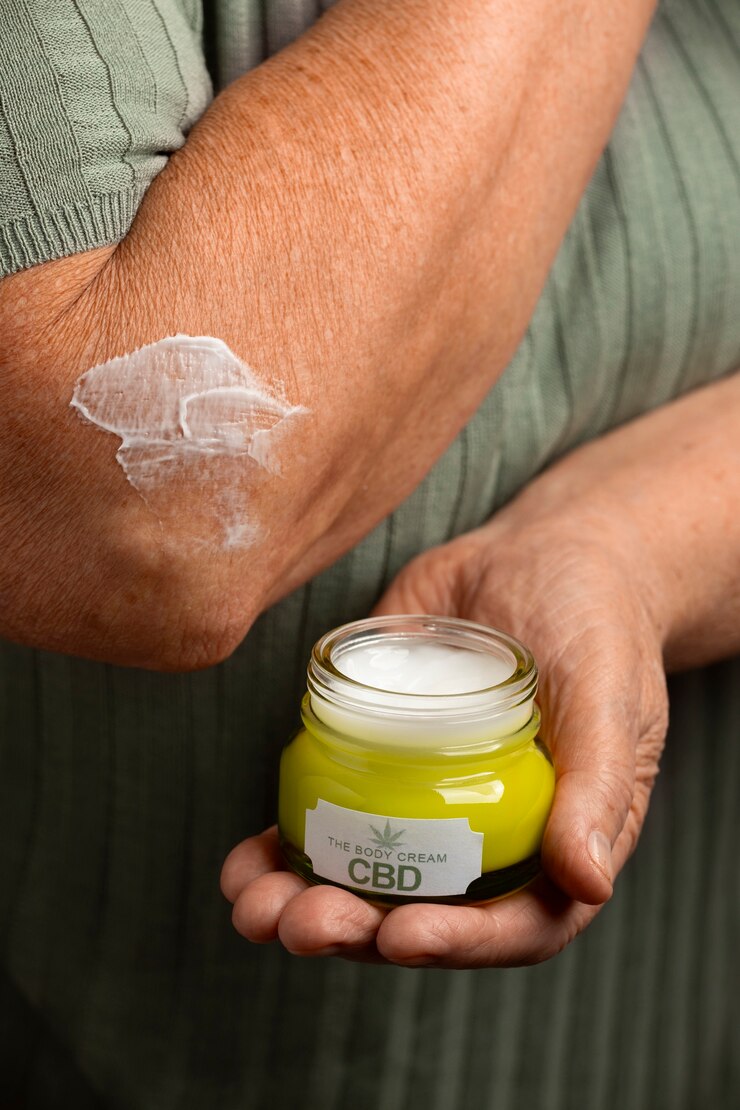
The illustration shows a concept, not a product comparison. It cannot tell you how much water loss a particular cream prevents or how long the effect lasts. Those are finished-formula questions that an ingredient list alone cannot answer.
Occlusive vs humectant vs emollient
These terms describe functions, and the categories can overlap. An ingredient may soften skin as well as help form a film. Reading the label becomes easier when you look for a combination of jobs instead of trying to assign every product to one exclusive category.
Swipe the table to compare all columns.
| Function | What it contributes | Examples you may see on a label | Useful question to ask |
|---|---|---|---|
| Humectant | Attracts and holds water | Glycerin, sodium hyaluronate | Does the formula support hydration? |
| Emollient | Softens and smooths the skin's feel | Glyceryl stearate and various oils or fatty ingredients | Does rough-feeling skin feel more comfortable? |
| Occlusive | Reduces evaporation through a surface film | Mineral oil, petrolatum, dimethicone | Does the moisturizing layer suit the area and routine? |
| Complete moisturizer | Combines ingredients into a usable formula | Cream, lotion or ointment with several ingredient types | Do the texture, directions and tolerance work for me? |
A hyaluronic acid serum is therefore not automatically a substitute for a moisturizer. If you already use one, the useful question is whether your skin stays comfortable with that serum and your current cream. Adding another hydrating serum may not solve a routine that lacks an appropriate finishing layer.
Our comparison of niacinamide and hyaluronic acid covers a different decision: choosing between ingredients with different roles. It can help you avoid buying a serum for a job better handled by your moisturizer.
How to choose the right texture
Start with when and where dryness bothers you. Cheeks that feel tight after washing, hands that are repeatedly washed and a small dry patch do not necessarily need the same product. A heavy all-over facial layer may be inconvenient when only one area needs more protection.
Ointments are generally greasier and more occlusive than creams, while lotions often feel lighter. These are useful starting points, not a ranking in which the greasiest product always wins. The American Academy of Dermatology's dry-skin advice recommends creams or ointments for dry skin and emphasizes gentle, fragrance-free care.
Match the format to the part of your day
Swipe the table to compare all columns.
| Your situation | A reasonable starting point | What to watch for |
|---|---|---|
| Daytime facial dryness under sunscreen | A cream that settles comfortably before the next layer | Pilling, a heavy feel or using too much product |
| A small stubborn dry area on otherwise comfortable skin | Targeted use of a suitable richer moisturizer | Irritation or an unexplained rash rather than simple dryness |
| A face that easily develops bumps with heavy layers | A lighter tolerated formula; avoid unnecessary all-over layering | New breakouts or follicle-centered bumps |
| Dry body skin after washing | A body cream or lotion you can spread consistently | Whether comfort lasts between applications |
| Burning, cracking or persistent inflamed skin | Simplify the routine and seek advice if it persists | Treating every rash as a need for a heavier cream |
If you are choosing between a body oil and a lotion, how body oils and lotions differ explains why the formula and application context matter. A product that works well on legs may still feel impractical under facial sunscreen.
Read a real ingredient panel: the XIMONTHS face cream
The Collagen Moisturizer with Hyaluronic Acid & Bee Venom is the yellow-carton Bee Revive 50g moisturizer for the face and neck. Its ingredient artwork includes hyaluronic acid, collagen, bee venom, mineral oil, glycerin and glyceryl stearate. Those are more useful starting points for understanding its moisturizing role than the word “regenerating” on the packaging.
Mineral oil provides an occlusive role; glycerin and hyaluronic acid are humectants; glyceryl stearate contributes to the formula and its emollient character. Together, these ingredients illustrate how a cream can combine moisture-binding, softening and surface-film functions rather than relying on one fashionable ingredient.

The packaging also highlights bee venom and collagen. That does not make the product a treatment that rebuilds deeper tissue, nor does it establish how it compares with another cream in a controlled test. Choose it as a facial moisturizing option if the formula and directions suit you—not because a cosmetic name guarantees biological regeneration.
The product directions specify a cleansed, dry face and neck, with a small amount spread gently while avoiding the eyes and lips. Follow that specific instruction for this product. Avoid this cream if you have a known bee-venom or bee-product allergy. A home patch test cannot rule out allergy. Stop if irritation develops, and avoid broken skin.

Check the jar, not just the word collagen: this yellow 50g Bee Revive formula lists hyaluronic acid. It is a different product from the blue-carton 60g collagen face cream with acetyl tripeptide-1. The distinction helps you compare the actual formula, size and application area; it is not evidence that one outperforms the other.
If you are comparing options in the XIMONTHS skin-care collection, compare ingredient information and intended use rather than assuming that every cream with bee venom has the same texture or purpose.
Where an occlusive moisturizer goes in a routine
For an ordinary routine without conflicting product instructions, a lighter hydrating layer typically comes before a cream. In the morning, sunscreen follows your skin-care steps according to its directions. Do not mix the moisturizer into sunscreen in your palm to save a step.
The AAD recommends moisturizing promptly after washing to help retain moisture. That is useful general guidance, but a specific product may instruct application to dry skin. Follow its label, especially when it is part of a routine that also includes prescription treatment or other products with particular application requirements.
Try a small amount first. More cream is not automatically more useful: an excess can feel sticky, migrate toward the eyes or make later layers roll into small flakes. If a routine pills, reduce the number of layers and the amount used before assuming that you need a stronger moisturizer.
A simple way to test whether the routine works for you
Keep your cleanser and other usual steps consistent while introducing one moisturizer. Notice comfort after washing, later in the day and when applying sunscreen. You are looking for a routine you can repeat comfortably, not a dramatic one-night change in photographs.
Record any stinging, itching or new bumps and stop a product that irritates. A home tolerance check does not rule out allergy, but changing one thing at a time makes your observations more useful. If you change cleanser, serum and cream together, it becomes difficult to know which step helped or caused trouble.
Do you need to put petrolatum over your cream?
Not necessarily. A well-tolerated cream may already provide the level of moisture retention you need. Adding a separate heavy layer is an option for some routines, not a requirement attached to the word “occlusive.”
DermNet notes that occlusive products can aggravate problems such as acne, folliculitis or perioral dermatitis in some people. If heavy layers repeatedly produce bumps, or you have an inflamed rash around your mouth, adding more of the same is unlikely to be a helpful experiment.
Be especially cautious about putting a thick occlusive layer over an irritating active or a prescription product without checking the instructions. A moisturizer cannot make an unsuitable combination automatically gentle. Persistent burning or redness calls for a simpler routine and advice, not a more elaborate layering order.
Common questions about occlusive moisturizers
Is hyaluronic acid an occlusive?
Hyaluronic acid and sodium hyaluronate are generally discussed as humectants. A product containing them may also include occlusive ingredients, but their presence alone does not tell you that the product forms the finishing layer your routine needs.
Is mineral oil useful in a face cream?
Mineral oil is a recognized occlusive ingredient. Its usefulness in a particular cream depends on the whole formula, your skin's tolerance and how the product fits your routine. One ingredient cannot predict the finished texture or guarantee a particular result.
Do oily skin types need to avoid every occlusive ingredient?
No single rule fits everyone. A lighter moisturizer may be comfortable even if it includes an occlusive ingredient. Pay attention to the finished product and your response, especially if heavy layers tend to cause bumps.
Can I use an occlusive moisturizer in the morning?
Yes, if the product suits daytime use and works with your sunscreen. Apply according to directions, avoid excess and keep sunscreen as its own step. A greasy feeling is not proof that the moisturizer is working better.
Does a moisturizer replace sunscreen?
No. Moisture retention and sun protection are different functions. Unless a product is labeled as a sunscreen with appropriate directions, do not count it as your sun-protection step.
For a practical order of application, see our dry-skin routine and moisture-layering guide.
Product facts and source links checked September 30, 2026. XIMONTHS sells the moisturizer example above; no finished-product water-loss test is presented here.